...no have common sense, ah?
Pandas may look like cuddly soft toys, but come on... *roll eyes*
Read about the foolish "bravado": Panda in China zoo bites student who wanted a hug
Showing posts with label Animal news. Show all posts
Showing posts with label Animal news. Show all posts
Monday, November 24, 2008

Friday, November 14, 2008
Memorable quote
Re this tragic incident:

About the man who was mauled to death by the white tigers in the tigers' den at the zoo, the SO commented:
" Haiya, what a way to die! "
I thought: Hmm... yalor, poor man died in much terror and fright... *sympathetic*
And then he said:
" He will get the tigers into trouble! "
>_<"
About the man who was mauled to death by the white tigers in the tigers' den at the zoo, the SO commented:
" Haiya, what a way to die! "
I thought: Hmm... yalor, poor man died in much terror and fright... *sympathetic*
And then he said:
" He will get the tigers into trouble! "
>_<"
Wednesday, October 08, 2008
坏女人 vs Film Goddess
 Much has been said about the Palin woman, such as her infamous gaffes that she'd committed when she was interviewed about her knowledge on foreign policy (her answer goes along the line of "Alaska is near to Russian and Canada"), but lots have been said about her being an animal- and environmental activists nightmare. Her list of misdemeanor to animals and possible environmental damage is just too long to mention - just do a search for "Sarah Palin and animals" on YouTube and you'll get an idea.
Read : Brigitte Bardot slams Sarah Palin as a 'disgrace to women'
(Chinese translator: 坏女人 means "bad woman")
Friday, October 03, 2008
Animal abuser & killer in the making
What a sad boy, and even sadder parents:
A blank-faced 7-year-old boy broke into a popular Outback zoo, fed a string of animals to the resident crocodile and bashed several lizards to death with a rock, the zoo's director said Friday.
The boy jumped a security fence at the Alice Springs Reptile Center in central Australia early Wednesday, then went on a 30-minute killing spree, using a rock to slay three lizards, including the zoo's beloved, 20-year-old goanna, which he then fed to "Terry," an 11-foot (3.3 meter), 440-pound (200 kilogram) saltwater crocodile, said zoo director Rex Neindorf.
Read: Aussie boy breaks into zoo, feeds animals to croc
Poor animals.
A blank-faced 7-year-old boy broke into a popular Outback zoo, fed a string of animals to the resident crocodile and bashed several lizards to death with a rock, the zoo's director said Friday.
The boy jumped a security fence at the Alice Springs Reptile Center in central Australia early Wednesday, then went on a 30-minute killing spree, using a rock to slay three lizards, including the zoo's beloved, 20-year-old goanna, which he then fed to "Terry," an 11-foot (3.3 meter), 440-pound (200 kilogram) saltwater crocodile, said zoo director Rex Neindorf.
Read: Aussie boy breaks into zoo, feeds animals to croc
Poor animals.
Saturday, September 27, 2008
Left for dead, crippled mutt gets new lease of life
ST 27 Sep 2008
 TWO years ago, Sayang was found in a drain on Jurong Island, emaciated, riddled with infections and his hind legs missing.
Now, the three-year-old mutt is busy chasing after his four-legged playmates in his new home at Upper Thomson.
Sayang has a wheelchair - imported from the United States by dog rescue organisation Action for Singapore Dogs (ASD) - and pulls himself around on his now-muscular front legs.
'He is very happy now. He gets around really fast,' said his owner, Ms Ng Choong Leng.
The 44-year-old adopted Sayang a year ago after a security guard found the dog lying in a drain.
'He was probably just surviving on drain water because he couldn't move,' said ASD president Ricky Yeo, 40.
No one knows exactly how Sayang lost his legs, though Mr Yeo suspects the dog could have been run over by a truck or been a victim of abuse.
After ASD volunteers rescued him, Sayang had to have his testicles removed because of an infection. He now wears diapers because he has no control over his urine and bowel movements.
When he first arrived at Ms Ng's home, Sayang was afraid of people. Over time, however, he has grown used to the presence of people and is now affectionate. He even sticks up for himself around Ms Ng's other dogs.
'Now he is very feisty and fights with the other dogs over food, and he stands his ground,' she said.
Sayang is the Malay term for love and affection.
'When we were nursing him, dressing his wounds, we would address him as 'sayang' to soothe and comfort him, so that name stuck,' said Ms Ng.
LIAW WY-CIN
(Source: http://www.straitstimes.com/Singapore/Story/STIStory_283001.html)
TWO years ago, Sayang was found in a drain on Jurong Island, emaciated, riddled with infections and his hind legs missing.Now, the three-year-old mutt is busy chasing after his four-legged playmates in his new home at Upper Thomson.
Sayang has a wheelchair - imported from the United States by dog rescue organisation Action for Singapore Dogs (ASD) - and pulls himself around on his now-muscular front legs.
'He is very happy now. He gets around really fast,' said his owner, Ms Ng Choong Leng.
The 44-year-old adopted Sayang a year ago after a security guard found the dog lying in a drain.
'He was probably just surviving on drain water because he couldn't move,' said ASD president Ricky Yeo, 40.
No one knows exactly how Sayang lost his legs, though Mr Yeo suspects the dog could have been run over by a truck or been a victim of abuse.
After ASD volunteers rescued him, Sayang had to have his testicles removed because of an infection. He now wears diapers because he has no control over his urine and bowel movements.
When he first arrived at Ms Ng's home, Sayang was afraid of people. Over time, however, he has grown used to the presence of people and is now affectionate. He even sticks up for himself around Ms Ng's other dogs.
'Now he is very feisty and fights with the other dogs over food, and he stands his ground,' she said.
Sayang is the Malay term for love and affection.
'When we were nursing him, dressing his wounds, we would address him as 'sayang' to soothe and comfort him, so that name stuck,' said Ms Ng.
LIAW WY-CIN
(Source: http://www.straitstimes.com/Singapore/Story/STIStory_283001.html)
9,300 pets abandoned by owners
ST 27 Sep 2008
By Judith Tan & Liaw Wy-Cin
'BARKING too much.'
'Too hyperactive.'
'The maid is gone.'
These are some of the silliest reasons pet owners have offered for dumping their furry friends, said Ms Deirdre Moss, the executive officer of the Society for the Prevention of Cruelty to Animals (SPCA) here.
But they are why 9,328 animals - cats, dogs, rabbits and hamsters - were left at the SPCA between July last year and June this year.
Of this number, more than 3,000 were dogs. And among abandoned dogs, over half were pedigreed.
To stem this flood, the SPCA gives talks at schools - from primary to tertiary - to spread the message about responsible pet ownership.
It is an attempt to tackle the problem at the source - the SPCA lacks the space and resources to care for every animal left at its premises in Mount Vernon Road.
9,300 pets dumped in just 1 year
SPCA teaming up with animal welfare group to educate owners in exhibitionBy Judith Tan & Liaw Wy-Cin
'BARKING too much.'
'Too hyperactive.'
'The maid is gone.'
These are some of the silliest reasons pet owners have offered for dumping their furry friends, said Ms Deirdre Moss, the executive officer of the Society for the Prevention of Cruelty to Animals (SPCA) here.
But they are why 9,328 animals - cats, dogs, rabbits and hamsters - were left at the SPCA between July last year and June this year.
Of this number, more than 3,000 were dogs. And among abandoned dogs, over half were pedigreed.
To stem this flood, the SPCA gives talks at schools - from primary to tertiary - to spread the message about responsible pet ownership.
It is an attempt to tackle the problem at the source - the SPCA lacks the space and resources to care for every animal left at its premises in Mount Vernon Road.
Of the more than 3,000 dogs it received from July last year to June this year, over 2,000 had to be put down.
All licensed pet dogs are required to be micro-chipped, but the SPCA still finds 80 'lost' dogs each month with no information on them.
Barely one in 10 of all animals the society gets is adopted or claimed by owners.
Action for Singapore Dogs (ASD), a non-profit organisation which rescues stray and abandoned dogs, has a no-kill policy, but it has to rely on its network of 20 to 30 dog owners to help look after them temporarily.
The ASD has close to 100 dogs at its adoption centre in Lim Chu Kang and elsewhere.
Its president Ricky Yeo, 40, said: 'Many of these dogs are abandoned when young couples move on to start a family or break up.
'Couples will fight over the house, but no one wants the dog. One was even tossed out from a moving car.'
The Cat Welfare Society, a charity run almost entirely by volunteers, said many cats are dumped on the streets when they outgrow their 'kitten cuteness'.
Said committee member Ang Li Tin: 'There are many who take stray cats home, let them roam and mate with other cats in the area, and then dump the kittens in carparks or dumpsters.
'The kittens either starve, get abused or survive on the streets, while contributing to more cats being born to live on the streets.'
Mr Goh Shih Yong, a spokesman for the Agri-Food and Veterinary Authority, said the only long-term solution is to teach people responsible pet ownership.
Many people are willing to pay between $650 and $2,000 for Maltese puppies 'because they are cute, white and fluffy'.
But this breed ranks high in the statistics of dumped pedigree dogs - 106 went unclaimed in the first eight months of this year.
'Education is key to arresting the pet abandonment and stray animal problem in the long run,' Mr Goh said.
The message is getting through to at least some tertiary students, who have stepped forward to promote animal welfare.
People for Animal Welfare (PAW), formed in 2005 by a group at the Singapore Management University, is doing just this.
It will team up with the SPCA to mount an exhibition on the issue at the East Coast Parkway on World Animal Day on Oct 5.
There will also be a photo gallery of animals available for adoption. T-shirts and calendars will be on sale to raise funds for the society.
Ms Moss said: 'Because we take in so many animals, we are not able to find homes for all of them. Keeping a pet is a life-time commitment, and not just for the novelty.'
(Source: http://www.straitstimes.com/Singapore/Story/STIStory_282999.html)
Thursday, September 25, 2008
Tainted milk sickens animals
Sep 25, 2008
Tainted milk sickens animals
SHANGHAI - CHINA's milk crisis apparently has spread to animals.
Three baby animals at the Hangzhou Wild Animal Park near Shanghai have kidney stones after being fed milk powder for more than a year, said Zhang Xu, a veterinarian with the Hangzhou Zhangxu Animal Hospital.
The powder was made by the Sanlu Group Co., which is at the center of the tainted milk crisis. The industrial chemical melamine has been found in a growing range of Chinese-made dairy products, and it has been blamed for sickening 53,000 infants in China and killing four.
The two orangutans and a lion cub were found with kidney stones on Wednesday after concerned officials sent them to Zhang for a checkup.
'The milk powder crisis made us very worried about the health situation of baby animals,' Ju Lijia, the animal park's public affairs manager, said by phone on Wednesday.
'We stopped feeding with Sanlu after it was found to be tainted.' The orangutans and lion were the only ones found with kidney stones, Mr Ju said.
Officials at the Beijing Zoo and zoos in the other major cities of Shanghai, Guangzhou and Xian said they had no cases of animals sickened from milk powder.
An official at the world's most famous panda reserve, the Wolong Nature Reserve, said the baby pandas there are not fed on milk made from formula. -- AP
Source: http://www.straitstimes.com/Breaking%2BNews/World/Story/STIStory_282459.html
Tainted milk sickens animals
SHANGHAI - CHINA's milk crisis apparently has spread to animals.
Three baby animals at the Hangzhou Wild Animal Park near Shanghai have kidney stones after being fed milk powder for more than a year, said Zhang Xu, a veterinarian with the Hangzhou Zhangxu Animal Hospital.
The powder was made by the Sanlu Group Co., which is at the center of the tainted milk crisis. The industrial chemical melamine has been found in a growing range of Chinese-made dairy products, and it has been blamed for sickening 53,000 infants in China and killing four.
The two orangutans and a lion cub were found with kidney stones on Wednesday after concerned officials sent them to Zhang for a checkup.
'The milk powder crisis made us very worried about the health situation of baby animals,' Ju Lijia, the animal park's public affairs manager, said by phone on Wednesday.
'We stopped feeding with Sanlu after it was found to be tainted.' The orangutans and lion were the only ones found with kidney stones, Mr Ju said.
Officials at the Beijing Zoo and zoos in the other major cities of Shanghai, Guangzhou and Xian said they had no cases of animals sickened from milk powder.
An official at the world's most famous panda reserve, the Wolong Nature Reserve, said the baby pandas there are not fed on milk made from formula. -- AP
Source: http://www.straitstimes.com/Breaking%2BNews/World/Story/STIStory_282459.html
A dog in a mosque?
Sep 25, 2008
Guide dog allowed in mosque
Ruling by Muslim body hailed as a breakthrough
LONDON - A BRITISH Muslim body has ruled that a blind student can take a guide dog with him to his local mosque, a judgment Muslim and blind advocacy groups are hailing as a breakthrough.
The Muslim Law Council (Shariah) UK issued a fatwa allowing 18-year-old Mahomed-Abraar Khatri to take his dog with him to the Bilal Jamia Mosque in the English city of Leicester, about 160km north of London.
'I hope it will open up some doors and let other people to get a dog and not be worried of any religious aspects behind it,' Mr Khatri told British Broadcasting Corporation (BBC) television in an interview broadcast on Wednesday.
Observant Muslims generally regard dogs as unclean and they are not allowed in mosques. It was not immediately clear whether this was the first time a dog has been allowed in a British mosque, or whether the move had any precedent elsewhere.
Mr Ahmed Rehab, a spokesman for the US-based Council on American Islamic Relations, said he had never heard of any similar incident in the United States.
The fatwa does not allow the dog into the prayer hall itself. Instead, Mr Khatri can leave it in a gated area in the entryway near where the shoes are kept.
BBC television footage showed Mr Khatri ushering his yellow Labrador, Vargo, into the enclosure.
The Muslim Council of Britain, an umbrella group of UK Muslim organisations, said it was pleased with the ruling.
'The scholars who have deliberated this ruling have explored the issue from all angles and we are delighted with their fatwa,' MCB Assistant Secretary-General Shaykh Ibrahim Mogra said.
The Guide Dogs for the Blind Association described the decision as 'a massive step forward for other blind and partially sighted Muslims'. -- AP
Source: http://www.straitstimes.com/Breaking%2BNews/World/Story/STIStory_282367.html
Guide dog allowed in mosque
Ruling by Muslim body hailed as a breakthrough
LONDON - A BRITISH Muslim body has ruled that a blind student can take a guide dog with him to his local mosque, a judgment Muslim and blind advocacy groups are hailing as a breakthrough.
The Muslim Law Council (Shariah) UK issued a fatwa allowing 18-year-old Mahomed-Abraar Khatri to take his dog with him to the Bilal Jamia Mosque in the English city of Leicester, about 160km north of London.
'I hope it will open up some doors and let other people to get a dog and not be worried of any religious aspects behind it,' Mr Khatri told British Broadcasting Corporation (BBC) television in an interview broadcast on Wednesday.
Observant Muslims generally regard dogs as unclean and they are not allowed in mosques. It was not immediately clear whether this was the first time a dog has been allowed in a British mosque, or whether the move had any precedent elsewhere.
Mr Ahmed Rehab, a spokesman for the US-based Council on American Islamic Relations, said he had never heard of any similar incident in the United States.
The fatwa does not allow the dog into the prayer hall itself. Instead, Mr Khatri can leave it in a gated area in the entryway near where the shoes are kept.
BBC television footage showed Mr Khatri ushering his yellow Labrador, Vargo, into the enclosure.
The Muslim Council of Britain, an umbrella group of UK Muslim organisations, said it was pleased with the ruling.
'The scholars who have deliberated this ruling have explored the issue from all angles and we are delighted with their fatwa,' MCB Assistant Secretary-General Shaykh Ibrahim Mogra said.
The Guide Dogs for the Blind Association described the decision as 'a massive step forward for other blind and partially sighted Muslims'. -- AP
Source: http://www.straitstimes.com/Breaking%2BNews/World/Story/STIStory_282367.html
Wednesday, August 27, 2008
MP speaks up for community cats
I think it's a breakthrough for the social and moral progress of Singapore, even by just a little bit!
Only the brave with the most sincerest heart to serve would dare do this in parliament. It takes real courage to speak up for something that's always been considered mundane and unworthy of any attention by the authorities.
I've always enjoyed reading Mr Siew Kum Hong's articles to the press before he became a NMP. Now he can be my hero. :D
http://meowies.multiply.com/journal/item/880/HDB_will_not_build_Cat_Cafes
Only the brave with the most sincerest heart to serve would dare do this in parliament. It takes real courage to speak up for something that's always been considered mundane and unworthy of any attention by the authorities.
I've always enjoyed reading Mr Siew Kum Hong's articles to the press before he became a NMP. Now he can be my hero. :D
http://meowies.multiply.com/journal/item/880/HDB_will_not_build_Cat_Cafes
Friday, July 25, 2008
Anyhow call "cat town" report
Kitty debate divides residents in 'cat town'
CARS ALONG JALAN PEMIMPIN SWERVE DANGEROUSLY TO DODGE CATS
By Ho Lian-yi
July 21, 2008
Pizza despatch rider Syed Faizal Mohsen, 25, would like to know, after getting into a crash because of one.
The Ngee Ann Polytechnic student, who works part-time, was riding a company-issued motorcycleon 6 Jul near Bishan, at Jalan Pemimpin, an area he said is 'notorious for cats'.
He was delivering pizza at around 8.50pm when he saw from the corner of his eye a stray white cat dash across the road.
He braked heavily and was thrown off his vehicle.
Mr Syed Faizal, who had cuts and bruises from the accident, said: 'I'm a cat lover so I didn't want to hit the cat.'
Two security guards who work nearby called an ambulance and he was sent to hospital for outpatient treatment.
The two guards told The New Paper on Sunday that Mr Syed Faizal was not the only person who had had mishaps because of the stray cats.
One of the guards, Mr Affendi Ismail, 37, said he had witnessed some of these accidents.
He said: 'The cats, they just cross the road, it's very dangerous. Sometimes, the cars try to avoid the cat and they will swerve. It's dangerous for pedestrians like me.'
His colleague, known only as Das, said: 'Every week, one or two cats will surely be hit by a car.'
Just a day before the pizza despatch rider accident, Mr Affendi said that he saw a car hitting a cat and injuring it.
And the day before that, a cat was killed in another road accident in the area, he added.
Mr Affendi said that there were many cats in the area because someone had been feeding them.
He claimed that one of the feeders, who arrived after Mr Syed Faizal was sent to hospital, had made sure the cat was sent to a vet.
But when told about the despatch rider who was also hurt, she seemed 'expressionless'.
 MISSING
On 8 Jul, The New Paper on Sunday met the feeder, an executive secretary in her 40s who wanted to be known only as Ms Ong.
She was petite, bespectacled, and was hefting a backpack.
Ms Ong said that what Mr Affendi said was 'prejudiced'. She claimed that she had told him she was 'concerned for both parties'.
She said she knows that the rider was receiving treatment, but what about the poor cat?
'It is also a life,' she said.
As for the cat population boom cited by the security guard, she said that the number of cats there have actually dwindled by more than half since she first started her nightly feeding at least eight years ago.
'Many have gone missing,' she said.
Perhaps pythons have been eating them or residents have been trapping them, she suggested.
Ms Ong admitted that she has had some run-ins with unhappy residents, and said that she has sterilised the cats. She believes that she must have neutered more than 100 cats at the vet in the last eight years.
She agreed to let The New Paper on Sunday follow her on her daily feeding.
Her boyfriend, who lives in the east of Singapore, also joined her.
Pointing to one group of cats, she said: 'There used to be 20 cats here.
'Now only five.'

As for the cats being a traffic hazard, she said that it works both ways. In the last six months, more than 20 cats have disappeared or died, some possibly to vehicle accidents, she said.
'People don't think of cats, they only think of people, and their cars,' she said.
While some people who visited and worked in the area said that the cats did not inconvenience them or pose a traffic hazard, others, such as Madam Ng, 68, a housewife, called them a disturbance.
She said cats sometimes invade her kitchen to get at the food and leave their droppings in her garden.
However, another resident, a pharmaceutical salesperson in her 40s who wanted to be known only as Judy, said that she was surprised that there were complaints, especially about the cats causing traffic accidents.
'You hardly see them,' she said, adding that they appeared only when a feeder was around.
________________________________________________________________
Stray cat problem: Does neutering work?
1. The total number of cats being impounded by Agri-Food & Veterinary Authority (AVA) over the last three years has been falling:
# 2005: 5,518
# 2006: 5,134
# 2007: 3,777
2. Does a trap, neuter and return policy work?
* I laughed out loud when I read this part... :P
CARS ALONG JALAN PEMIMPIN SWERVE DANGEROUSLY TO DODGE CATS
By Ho Lian-yi
July 21, 2008
Pizza despatch rider Syed Faizal Mohsen, 25, would like to know, after getting into a crash because of one.
The Ngee Ann Polytechnic student, who works part-time, was riding a company-issued motorcycleon 6 Jul near Bishan, at Jalan Pemimpin, an area he said is 'notorious for cats'.
He was delivering pizza at around 8.50pm when he saw from the corner of his eye a stray white cat dash across the road.
He braked heavily and was thrown off his vehicle.
Mr Syed Faizal, who had cuts and bruises from the accident, said: 'I'm a cat lover so I didn't want to hit the cat.'
Two security guards who work nearby called an ambulance and he was sent to hospital for outpatient treatment.
The two guards told The New Paper on Sunday that Mr Syed Faizal was not the only person who had had mishaps because of the stray cats.
One of the guards, Mr Affendi Ismail, 37, said he had witnessed some of these accidents.
He said: 'The cats, they just cross the road, it's very dangerous. Sometimes, the cars try to avoid the cat and they will swerve. It's dangerous for pedestrians like me.'
His colleague, known only as Das, said: 'Every week, one or two cats will surely be hit by a car.'
Just a day before the pizza despatch rider accident, Mr Affendi said that he saw a car hitting a cat and injuring it.
And the day before that, a cat was killed in another road accident in the area, he added.
Mr Affendi said that there were many cats in the area because someone had been feeding them.
He claimed that one of the feeders, who arrived after Mr Syed Faizal was sent to hospital, had made sure the cat was sent to a vet.
But when told about the despatch rider who was also hurt, she seemed 'expressionless'.
MISSINGOn 8 Jul, The New Paper on Sunday met the feeder, an executive secretary in her 40s who wanted to be known only as Ms Ong.
She was petite, bespectacled, and was hefting a backpack.
Ms Ong said that what Mr Affendi said was 'prejudiced'. She claimed that she had told him she was 'concerned for both parties'.
She said she knows that the rider was receiving treatment, but what about the poor cat?
'It is also a life,' she said.
As for the cat population boom cited by the security guard, she said that the number of cats there have actually dwindled by more than half since she first started her nightly feeding at least eight years ago.
'Many have gone missing,' she said.
Perhaps pythons have been eating them or residents have been trapping them, she suggested.
Ms Ong admitted that she has had some run-ins with unhappy residents, and said that she has sterilised the cats. She believes that she must have neutered more than 100 cats at the vet in the last eight years.
She agreed to let The New Paper on Sunday follow her on her daily feeding.
Her boyfriend, who lives in the east of Singapore, also joined her.
Pointing to one group of cats, she said: 'There used to be 20 cats here.
'Now only five.'
As for the cats being a traffic hazard, she said that it works both ways. In the last six months, more than 20 cats have disappeared or died, some possibly to vehicle accidents, she said.
'People don't think of cats, they only think of people, and their cars,' she said.
While some people who visited and worked in the area said that the cats did not inconvenience them or pose a traffic hazard, others, such as Madam Ng, 68, a housewife, called them a disturbance.
She said cats sometimes invade her kitchen to get at the food and leave their droppings in her garden.
However, another resident, a pharmaceutical salesperson in her 40s who wanted to be known only as Judy, said that she was surprised that there were complaints, especially about the cats causing traffic accidents.
'You hardly see them,' she said, adding that they appeared only when a feeder was around.
________________________________________________________________
Stray cat problem: Does neutering work?
1. The total number of cats being impounded by Agri-Food & Veterinary Authority (AVA) over the last three years has been falling:
# 2005: 5,518
# 2006: 5,134
# 2007: 3,777
2. Does a trap, neuter and return policy work?
Sterilising a cat helps to prevent procreation. However, sterilised cats can pose other problems, such as when they go into houses and defecate or take food from the premises. It would depend on the community of the estate if they are willing accept a trap, neuter and return scheme.
3. What is AVA's policy when it comes to people who feed cats?
People should not indiscriminately feed cats and litter the area. They should, as far as possible, find homes for the cats, have the cats sterilised, or surrender unwanted cats to the authorities.
4. What can you do if there is a stray-cat problem in the area?
AVA provides loan of cat traps to residents troubled by stray cats. It is a free service. Residents may contact AVA's Centre for Animal Welfare and Control, 75 Pasir Panjang Road, to arrange for a loan of traps. (Tel:1800-4761600)
- Information from Mr Madhavan Kannan, Head of AVA's Centre for Animal Welfare and Control
________________________________________________________________
SOME residents at affected housing estates are in favour of making the feeding of stray cats in housing estates an offence because it could cause the population to increase further.
While some people have been fined for feeding wild monkeys, there is no rule against the feeding of stray cats.
Experts have said that feeding monkeys changes their dietary habits and makes them aggressive when they are denied food.
Be they cats or monkeys, Mr Wong Tuan Wah, National Parks Board's (NParks) director of conservation, said: 'We do not allow feeding of stray animals in our parks.' *
Under the Parks and Trees Act, monkey feeders can be fined up to $50,000 and/or jailed up to six months. NParks also increased the composition fine from $250 to $500 in February.
While it is not an offence to feed cats in housing estates, those who do so can be booked for littering if they dirty the surroundings.
Mr Chong Gid Chuan, 38, a manager, said he found the feeding of cats 'very dirty'.
Madam Hau, 55, an assistant general manager, said that she would be fully supportive of a ban. She claimed that one cat that was 'maintained' by a feeder loved to go into her lawn and leave droppings behind, and it was 'very smelly'.
But others were against the idea of a ban. Ms Deirdre Moss, executive officer of the Society for the Prevention of Cruelty to Animals (SPCA), said: 'The SPCA objects strongly to the suggestion of banning the feeding of stray cats. It is an extremely shortsighted suggestion, and not humane.'
SPCA has a voucher programme for the sterilisation of strays, which enables members of the public to take a stray animal to a participating veterinary clinic for sterilisation. SPCA pays the cost.
Mr Marcus Loo, 28, a businessman selling pet products, said that as long as feeding was done discreetly and cleaning up was done afterwards, he had no problem with it.
He said: 'If you really take out the majority of cats in the area, in a month's time, other cats will just take over the territory.'
Video editor Farah Iqbal, 26, said that cat-feeding is not comparable to monkey-feeding, since cats do not become aggressive.
A resident in the Jalan Pemimpin area, who wanted to be known only as Judy, said: 'Some cat-feeders are responsible people who sterilise the cats. If the population of cats is under control now, why can't we feed the cats?'
(Source: http://www.tnp.sg/news/story/0,4136,171225,00.html)* I laughed out loud when I read this part... :P
Procreation : Humans & Animals
I agree with gist of the letter. Like animals, some humans need to be neutered too.
ST Forum, 25 July 2008
IMPROVING BIRTH RATES
Procreation has everything to do with affordability
I REFER to last Saturday's letter by five mothers, each with many children, 'Extend benefits to fifth and subsequent children'.
While the Government should do more to arrest the falling birth rate, I absolutely disagree on extending benefits to bigger families. Contrary to what the five mothers said, procreation has everything to do with affordability. If you ask the Government to contribute, sad to say, you are already in way over your head.
We live in Singapore, a small island with no natural resources, so we can survive only by being pragmatic. How many times have we seen couples struggle to raise a big family reported in the newspapers?
There was a security guard who fed his family of four children with just a packet of rice for lunch - that's one packet of rice shared by six. Then there was a family of criminals whose offences ranged from theft to drug trafficking. The list goes on and on.
When your family grows too big, there are many constraints. First, the attention parents can give to each child becomes limited. Second, each child's development is hindered by its parents' limited financial resources.
I am not saying having many children is bad. It's bad only when you know it's not economically viable. No matter how much you love children, it should not be an excuse to have as many as you like.
This is the difference between humans and animals. We exercise constraint and use our judgment. That's why we can have family planning but animals cannot.
I agree with the Government: Those who can should have more, but those who cannot should exercise restraint. What is the point of having more children, when you cannot raise them properly? Eventually, the innocent children are the ones who suffer.
Chua Boon Hou
ST Forum, 25 July 2008
IMPROVING BIRTH RATES
Procreation has everything to do with affordability
I REFER to last Saturday's letter by five mothers, each with many children, 'Extend benefits to fifth and subsequent children'.
While the Government should do more to arrest the falling birth rate, I absolutely disagree on extending benefits to bigger families. Contrary to what the five mothers said, procreation has everything to do with affordability. If you ask the Government to contribute, sad to say, you are already in way over your head.
We live in Singapore, a small island with no natural resources, so we can survive only by being pragmatic. How many times have we seen couples struggle to raise a big family reported in the newspapers?
There was a security guard who fed his family of four children with just a packet of rice for lunch - that's one packet of rice shared by six. Then there was a family of criminals whose offences ranged from theft to drug trafficking. The list goes on and on.
When your family grows too big, there are many constraints. First, the attention parents can give to each child becomes limited. Second, each child's development is hindered by its parents' limited financial resources.
I am not saying having many children is bad. It's bad only when you know it's not economically viable. No matter how much you love children, it should not be an excuse to have as many as you like.
This is the difference between humans and animals. We exercise constraint and use our judgment. That's why we can have family planning but animals cannot.
I agree with the Government: Those who can should have more, but those who cannot should exercise restraint. What is the point of having more children, when you cannot raise them properly? Eventually, the innocent children are the ones who suffer.
Chua Boon Hou
Tuesday, July 15, 2008
Complain less, appreciate more
From My Paper, 14 July 2008
 ( Newspaper clipping kapo-ed from Chinky :P )
( Newspaper clipping kapo-ed from Chinky :P )Monday, July 14, 2008
Getting life's priorities right
From My Paper, Wed, Jul 09, 2008
Getting Life's Priorities Right
A PATIENT once told me: "You know what, doctor, when I was told that I have cancer, suddenly all my shares, my properties and my brand-new car have no more meaning."
Yet, the attachment that some Singaporeans have to their cars never fails to amaze me.
When they notice scratches on their vehicles after shooing off a cat resting on them, for example, they would complain to their condominium management or the town council.
These motorists get so angry with the destruction of their "happiness" that they will not rest their case until the cats in the carparks are removed.
In the Housing & Development Board carpark where I park my car, there is a cat which would occasionally rest on car bonnets, including mine.
I have found its paw marks on my windscreen several times, but there are no scratches on my car, just a few small dents that are definitely not caused by a cat.
Whenever I see the cat resting on other cars, I would shoo it off and brush its hair off the vehicles so that the motorists would not complain about the cat's presence.
To me, what is important about a car is that it is functioning well enough to be safe on the road.
So what if it has scratches or dents? Cars are bound to get such marks.
The car does not feel the scratches. Rather, it is our attachment to the car that makes us feel the pain.
The patient who spoke to me became depressed after he was diagnosed with cancer, but his condition improved after he took stock of what was truly important in his life.
When he was near his life's end, I asked him if he was afraid. He said no.
He had done no harm to others, he said, and he remembered the good things that he had done. He also relished the happiness he had brought to others.
He died peacefully.
Dr Tan Chek Wee
Getting Life's Priorities Right
A PATIENT once told me: "You know what, doctor, when I was told that I have cancer, suddenly all my shares, my properties and my brand-new car have no more meaning."
Yet, the attachment that some Singaporeans have to their cars never fails to amaze me.
When they notice scratches on their vehicles after shooing off a cat resting on them, for example, they would complain to their condominium management or the town council.
These motorists get so angry with the destruction of their "happiness" that they will not rest their case until the cats in the carparks are removed.
In the Housing & Development Board carpark where I park my car, there is a cat which would occasionally rest on car bonnets, including mine.
I have found its paw marks on my windscreen several times, but there are no scratches on my car, just a few small dents that are definitely not caused by a cat.
Whenever I see the cat resting on other cars, I would shoo it off and brush its hair off the vehicles so that the motorists would not complain about the cat's presence.
To me, what is important about a car is that it is functioning well enough to be safe on the road.
So what if it has scratches or dents? Cars are bound to get such marks.
The car does not feel the scratches. Rather, it is our attachment to the car that makes us feel the pain.
The patient who spoke to me became depressed after he was diagnosed with cancer, but his condition improved after he took stock of what was truly important in his life.
When he was near his life's end, I asked him if he was afraid. He said no.
He had done no harm to others, he said, and he remembered the good things that he had done. He also relished the happiness he had brought to others.
He died peacefully.
Dr Tan Chek Wee
Saturday, July 12, 2008
Readers' love stories
On the "Your Voice" page of this bi-monthly publication by the Central Singapore CDC (which stands for Community Development Council), the two most touching love stories were published, and which won their writers a $20 book voucher each.

The surprising thing (or unless it's because there were few letters?!?) was that both love stories are not about human relationships, but about the writers' cats!

The first story is about a cat called Lucky (click photo to read).

The 2nd one is about a cat called Snowy, who incidentally looks like Simbal (with his crossed eyes!) from Metta Cattery. :P
 (click photo to read)
What does it mean when the grassroots authorities publish stories about pet cats like these?
Hahaha! :)

The surprising thing (or unless it's because there were few letters?!?) was that both love stories are not about human relationships, but about the writers' cats!

The first story is about a cat called Lucky (click photo to read).

The 2nd one is about a cat called Snowy, who incidentally looks like Simbal (with his crossed eyes!) from Metta Cattery. :P
 (click photo to read)
What does it mean when the grassroots authorities publish stories about pet cats like these?
Hahaha! :)
Thursday, July 10, 2008
Dutch cat mothers panda cub
EJ sent me this link of an amazing happening at the Dutch zoo:
A Dutch tabby cat has adopted a red panda cub, which was abandoned by its mother at a zoo in the Netherlands.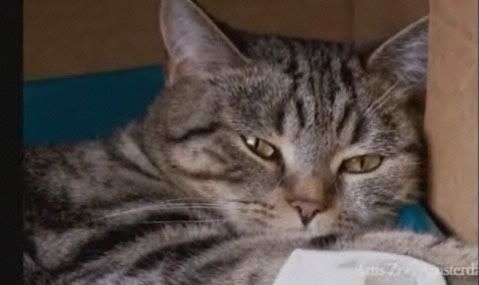
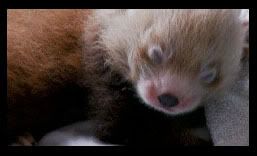
Video clip: http://news.bbc.co.uk/1/hi/world/europe/7500479.stm
Now who says cats aren't useful? ;)
A Dutch tabby cat has adopted a red panda cub, which was abandoned by its mother at a zoo in the Netherlands.
The zookeeper's cat had just given birth to four kittens and allowed the panda to join the litter.
Video clip: http://news.bbc.co.uk/1/hi/world/europe/7500479.stm
Now who says cats aren't useful? ;)
Wednesday, June 25, 2008
TODAY: Where's the 'heart' in heartland?
Today, June 25 2008
Where’s the ‘heart’ in heartland?
Town Councils should accord cat caregivers the same respect asthey do other residents
Letter from Helen Gamp
IN MY estate and the adjacent one, several residents like myself go beyond just ad hoc inter-racial harmony events, to forge a bond through a common goal of managing the cats in our community humanely. We trap cats, most of whom are abandoned, for sterilisation and offer assistance to the Town Council to resolve feedback about cats.
In the neighbouring estate — that is under another Town Council :— we started sterilising the cats about two years ago and the Town Council has agreed to let us, the caregivers, look into complaints and not engage pest controllers to round up the cats to be killed at the Agri-Food and Veterinary Authority.
Based on our knowledge about “community cats” and from talking to complainants as well as residents who may need to be educated on responsible pet ownership, we can resolve problems without the need to kill. This is important to us as we feel this is what the “heart” is about in a “heartland”.
However, we are disheartened by our recent discovery that a particular Town Council officer instructed the estate cleaning supervisor to direct his workers to trap cats and release them elsewhere. This came to light when a resident found a sterilised cat, bearing a left tipped ear, in a trap. We spoke to several workers, who admitted that they had trapped cats and released them in parks elsewhere.
This perhaps accounted for some of the missing cats over the last few months.
All we ask of the Town Council is to accord us the same respect as every other resident but we find that residents who complain seem to be accorded more rights especially if they complain aggressively.
When the Prime Minister was sworn in, he said that Singaporeans, through hard work and dedication, have built a cohesive and progressive nation that is founded on the principles of meritocracy, social justice and compassion.
We hope this inspiration can be translated in the paradigm shift of Town Councils and others as well. Instead of according due respect to residents such as ourselves, who are in fact following the Government’s repeated appeal for active citizenry, we are instead treated with disdain.
(Source: http://www.todayonline.com/articles/261448.asp)

Where’s the ‘heart’ in heartland?
Town Councils should accord cat caregivers the same respect asthey do other residents
Letter from Helen Gamp
IN MY estate and the adjacent one, several residents like myself go beyond just ad hoc inter-racial harmony events, to forge a bond through a common goal of managing the cats in our community humanely. We trap cats, most of whom are abandoned, for sterilisation and offer assistance to the Town Council to resolve feedback about cats.
In the neighbouring estate — that is under another Town Council :— we started sterilising the cats about two years ago and the Town Council has agreed to let us, the caregivers, look into complaints and not engage pest controllers to round up the cats to be killed at the Agri-Food and Veterinary Authority.
Based on our knowledge about “community cats” and from talking to complainants as well as residents who may need to be educated on responsible pet ownership, we can resolve problems without the need to kill. This is important to us as we feel this is what the “heart” is about in a “heartland”.
However, we are disheartened by our recent discovery that a particular Town Council officer instructed the estate cleaning supervisor to direct his workers to trap cats and release them elsewhere. This came to light when a resident found a sterilised cat, bearing a left tipped ear, in a trap. We spoke to several workers, who admitted that they had trapped cats and released them in parks elsewhere.
This perhaps accounted for some of the missing cats over the last few months.
All we ask of the Town Council is to accord us the same respect as every other resident but we find that residents who complain seem to be accorded more rights especially if they complain aggressively.
When the Prime Minister was sworn in, he said that Singaporeans, through hard work and dedication, have built a cohesive and progressive nation that is founded on the principles of meritocracy, social justice and compassion.
We hope this inspiration can be translated in the paradigm shift of Town Councils and others as well. Instead of according due respect to residents such as ourselves, who are in fact following the Government’s repeated appeal for active citizenry, we are instead treated with disdain.
(Source: http://www.todayonline.com/articles/261448.asp)

(Click to enlarge)
Monday, May 26, 2008
Three nice letters
These are a bit old news, but I really like the way the letters are written, especially the analogy used by Celeste Lock in the first letter. The DJs ought to feel ashamed for their unnecessary comments and remarks about strays after reading her letter. ;)
I'm keeping them for reference for those times when I have to try to educate those anti-cat people or worse, those idiots like this Chinese gal in her late-20's who thinks sterilising stray cats is an act of misplaced kindness by humans, coz she thinks that stray cats should be left alone to have their own sex lives and their own family. I finally stopped trying to talk to her after I almost vomited blood.
Letter #1 : ST Online Story, 16 May 2008
DJs' remarks on stray cats not funny and irresponsible
THIS is what I think of Ms Siau Li Chao's online letter, 'Radio DJs made tasteless remark on cats' (Monday).
One does not joke about the sufferings of the others, whether humans or animals. I do not find the DJs' comments at all funny. In fact, I think they were distasteful, uneducated and reflect the lack of empathy and basic respect for the lives of others. In a supposedly civilised society like Singapore, I am deeply disturbed and saddened by such comments.
I wonder: What is wrong with being kind to the homeless animals? Kindness and benevolence are open to all, not just human beings. Is there such a thing as 'selective kindness'? It is appalling to think that a Jack Russell Terrier owner should find 'street cats should be sent to Peru to be eaten' joke funny.
If I were to give money to a homeless human beggar so that he could buy food to fill his empty stomach, should I be fined and ridiculed for my act of empathy and kindness? I cannot possibly be giving money to a cat, can I? It would save the kind and responsible caregivers a lot of work if it were possible. If cats know how to buy food with the money then, perhaps, we run the risk of being sent to Peru instead.
Radio DJs must realise that they are on national radio and should be sensitive and responsible about the comments and/or jokes they make.
A responsible act of kindness should be fine, not fined.
Celeste Lock (Miss)
Letter #2 : AsiaOne News, 15 May 2008
Sterilising is best way to prevent more strays
I REFER to the letters 'Fine for giving food to monkeys should apply to feeding strays too' and 'Stray cats near Temasek Poly' (my paper, May 14).
Responsible stray cat feeders do not leave food and then walk away. They wait for the cats to finish and they clear up the leftover food.
Those who leave food lying around usually do it out of pity for the cats or for some other reasons. They need to be educated on the proper and responsible way of feeding strays.
Cats have a natural instinct to bury their faeces and urine, and they are not usually known to urinate or defecate on concrete floor or near objects such as shoes. They might, however, do so on sandy areas and soil.
Cats may scratch trees or wood but they retract their claws when walking on smooth surfaces such as a car bonnet, so there won't be any scratches on the car when they walk on it.
The best way to prevent more stray cats is to sterilise them and, despite ongoing publicity to do so, I have met many cat owners who feel that it is a 'pity' to sterilise their cats. They think that it would deny them of having a happy family.
However, cats, unlike human beings, do not mate for enjoyment. They do so because it is a natural instinct that they have no control over.
The simple procedure of neutering the cat would also solve the issues of spraying and caterwauling at night. Neutered cats are quiet and they do not fight for territory as compared with an unneutered feline.
In short, neutered cats generally do not create a nuisance. The public needs to be educated on this.
Moreover, if you remove sterilised strays from one area, it would only leave a void which other stray cats would fill.
Adding to the problem of stray cats are people who buy or adopt pets on a whim, only to abandon them when they realise they don't have the effort, time or money to maintain them.
Mrs Grace Peh
Letter #3 : AsiaOne News, 15 May 2008
Culling sends wrong message to children
I REFER to the two letters about stray cats by Ms Florence Goh and Madam Jacqueline De Souza.
I am glad to note that Ms Goh said she certainly did not condone the killing of animals, because some town councils cull stray cats in response to residents' feedback.
Many neighbourhoods do have a cat management programme called Trap-Neuter-Return-Manage and it has been successful in the reduction of the cat population.
I am not surprised by Madam De Souza's fear of stray cats spreading diseases, as this perception has been perpetuated by town council posters on not feeding strays.
However, we are at greatest risk of contracting diseases from fellow human beings on crowded trains, buses, shopping malls, for example.
A call for the removal of stray cats in the neighbourhood would lead to the rounding up - and culling - of the animals by pest controllers.
Is this the message we want to send to our children - anything that is deemed a nuisance is to be killed?
Rather, this is a great opportunity to educate school children on how the problem can be addressed with a more humane approach which includes sterilisation.
This will certainly inculcate the spirit of compassion that is sadly lacking in our increasingly materialistic society.
Dr Tan Chek Wee
I'm keeping them for reference for those times when I have to try to educate those anti-cat people or worse, those idiots like this Chinese gal in her late-20's who thinks sterilising stray cats is an act of misplaced kindness by humans, coz she thinks that stray cats should be left alone to have their own sex lives and their own family. I finally stopped trying to talk to her after I almost vomited blood.
Letter #1 : ST Online Story, 16 May 2008
DJs' remarks on stray cats not funny and irresponsible
THIS is what I think of Ms Siau Li Chao's online letter, 'Radio DJs made tasteless remark on cats' (Monday).
One does not joke about the sufferings of the others, whether humans or animals. I do not find the DJs' comments at all funny. In fact, I think they were distasteful, uneducated and reflect the lack of empathy and basic respect for the lives of others. In a supposedly civilised society like Singapore, I am deeply disturbed and saddened by such comments.
I wonder: What is wrong with being kind to the homeless animals? Kindness and benevolence are open to all, not just human beings. Is there such a thing as 'selective kindness'? It is appalling to think that a Jack Russell Terrier owner should find 'street cats should be sent to Peru to be eaten' joke funny.
If I were to give money to a homeless human beggar so that he could buy food to fill his empty stomach, should I be fined and ridiculed for my act of empathy and kindness? I cannot possibly be giving money to a cat, can I? It would save the kind and responsible caregivers a lot of work if it were possible. If cats know how to buy food with the money then, perhaps, we run the risk of being sent to Peru instead.
Radio DJs must realise that they are on national radio and should be sensitive and responsible about the comments and/or jokes they make.
A responsible act of kindness should be fine, not fined.
Celeste Lock (Miss)
Letter #2 : AsiaOne News, 15 May 2008
Sterilising is best way to prevent more strays
I REFER to the letters 'Fine for giving food to monkeys should apply to feeding strays too' and 'Stray cats near Temasek Poly' (my paper, May 14).
Responsible stray cat feeders do not leave food and then walk away. They wait for the cats to finish and they clear up the leftover food.
Those who leave food lying around usually do it out of pity for the cats or for some other reasons. They need to be educated on the proper and responsible way of feeding strays.
Cats have a natural instinct to bury their faeces and urine, and they are not usually known to urinate or defecate on concrete floor or near objects such as shoes. They might, however, do so on sandy areas and soil.
Cats may scratch trees or wood but they retract their claws when walking on smooth surfaces such as a car bonnet, so there won't be any scratches on the car when they walk on it.
The best way to prevent more stray cats is to sterilise them and, despite ongoing publicity to do so, I have met many cat owners who feel that it is a 'pity' to sterilise their cats. They think that it would deny them of having a happy family.
However, cats, unlike human beings, do not mate for enjoyment. They do so because it is a natural instinct that they have no control over.
The simple procedure of neutering the cat would also solve the issues of spraying and caterwauling at night. Neutered cats are quiet and they do not fight for territory as compared with an unneutered feline.
In short, neutered cats generally do not create a nuisance. The public needs to be educated on this.
Moreover, if you remove sterilised strays from one area, it would only leave a void which other stray cats would fill.
Adding to the problem of stray cats are people who buy or adopt pets on a whim, only to abandon them when they realise they don't have the effort, time or money to maintain them.
Mrs Grace Peh
Letter #3 : AsiaOne News, 15 May 2008
Culling sends wrong message to children
I REFER to the two letters about stray cats by Ms Florence Goh and Madam Jacqueline De Souza.
I am glad to note that Ms Goh said she certainly did not condone the killing of animals, because some town councils cull stray cats in response to residents' feedback.
Many neighbourhoods do have a cat management programme called Trap-Neuter-Return-Manage and it has been successful in the reduction of the cat population.
I am not surprised by Madam De Souza's fear of stray cats spreading diseases, as this perception has been perpetuated by town council posters on not feeding strays.
However, we are at greatest risk of contracting diseases from fellow human beings on crowded trains, buses, shopping malls, for example.
A call for the removal of stray cats in the neighbourhood would lead to the rounding up - and culling - of the animals by pest controllers.
Is this the message we want to send to our children - anything that is deemed a nuisance is to be killed?
Rather, this is a great opportunity to educate school children on how the problem can be addressed with a more humane approach which includes sterilisation.
This will certainly inculcate the spirit of compassion that is sadly lacking in our increasingly materialistic society.
Dr Tan Chek Wee
Friday, April 25, 2008
Ode to cats
From the Chinese newspaper ZaoBao.
It's quite a cheem/deep poem, with few words... I think it's about the beauty and charm of cats and being with cats.
 Click for bigger image
It's quite a cheem/deep poem, with few words... I think it's about the beauty and charm of cats and being with cats.
 Click for bigger image
Friday, April 11, 2008
Caring for animals is good
I am not surprised at all. :)
Farm visits can ease mental illness
OSLO - SPENDING time on a farm looking after cows, horses, or other animals can help people with mental illness better manage their anxieties and increase their confidence, according to a study published on Friday.
The findings by Norwegian scientists could further widen use of 'Green care", which enlists nature to ease patients' suffering.
'Looking after and having contact with farm animals has some positive effects on psychiatric patients with a diversity of serious illnesses,' said lead author Bente Berget of the Norwegian University of Life Sciences in Aas, west Norway.
She said that looking after pets such as cats and dogs has long been known to help some psychiatric patients but Friday's study was the first scientific assessment of benefits of working on farms.
About 60 patients who visited farms in Norway showed significant improvements in coping with anxiety and in their confidence in managing new situations, compared to a group of 30 other patients who did not look after animals.
The patients - suffering from schizophrenia, anxiety, personality or emotional disorders - visited a farm for three hours twice a week for 12 weeks and worked mainly with dairy cows, cattle raised for meat and horses.
The farms also had other animals around such as rabbits, chickens, cats or dogs.
The improvements were shown by patients' answers to questionnaires before and six months after the farm visits, according to the study in the journal Clinical Practice and Epidemiology in Mental Health.
-- REUTERS
Thursday, April 10, 2008
Plight of abandoned & unsterilised cats - TNP
The Electric New Paper, 9 April 2008
Plight of abandoned & unsterilised cats
ON Friday morning, as I was walking towards the clinic where I work, I spotted a tiny black kitten, small enough to sit in the palm of my hand.
It was skinny, hungry and so thirsty that it was lapping up water that flowed out from the washing of a rubbish chute.
I noticed an inflamed backside. The kitten was trusting enough to let me pick it up so that I could examine its anal region.
To my horror, the anus was almost completely covered with tiny maggots!
The few cats seen regularly in the vicinity of the clinic are all sterilised, as indicated by a small surgical cut on the tip of the left ear.
This meant the kitten was almost certainly abandoned by an irresponsible cat owner.
It would have been slowly eaten alive by the maggots if I had not seen it then.
The kitten was subsequently handed over to a friend, who is taking it to the vet and seeing to its re-homing.
Abandoned cats and kittens often suffer terribly. I strongly appeal to all cat owners to sterilise their cats.
I suggest that the town councils and the Housing Development Board work with organisations such as the Society for the Prevention of Cruelty to Animals and the Cat Welfare Society to formulate effective grassroots methods to bring the message of sterilisation to owners of cats.
These methods can include posters, offer of subsidised sterilisation to poor families, and organisation of ‘cat parties’ to inform and educate cat owners.
Dr Tan Chek Wee
Plight of abandoned & unsterilised cats
ON Friday morning, as I was walking towards the clinic where I work, I spotted a tiny black kitten, small enough to sit in the palm of my hand.
It was skinny, hungry and so thirsty that it was lapping up water that flowed out from the washing of a rubbish chute.
I noticed an inflamed backside. The kitten was trusting enough to let me pick it up so that I could examine its anal region.
To my horror, the anus was almost completely covered with tiny maggots!
The few cats seen regularly in the vicinity of the clinic are all sterilised, as indicated by a small surgical cut on the tip of the left ear.
This meant the kitten was almost certainly abandoned by an irresponsible cat owner.
It would have been slowly eaten alive by the maggots if I had not seen it then.
The kitten was subsequently handed over to a friend, who is taking it to the vet and seeing to its re-homing.
Abandoned cats and kittens often suffer terribly. I strongly appeal to all cat owners to sterilise their cats.
I suggest that the town councils and the Housing Development Board work with organisations such as the Society for the Prevention of Cruelty to Animals and the Cat Welfare Society to formulate effective grassroots methods to bring the message of sterilisation to owners of cats.
These methods can include posters, offer of subsidised sterilisation to poor families, and organisation of ‘cat parties’ to inform and educate cat owners.
Dr Tan Chek Wee
Subscribe to:
Posts (Atom)
 Atom Feed (xml)